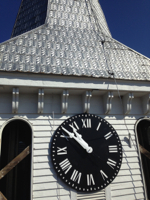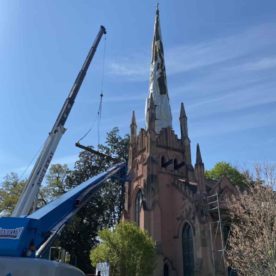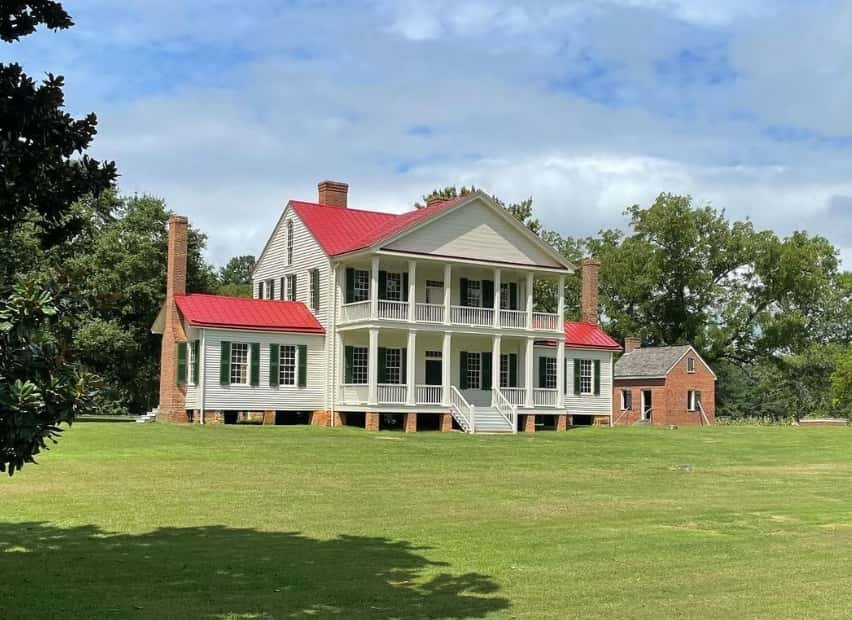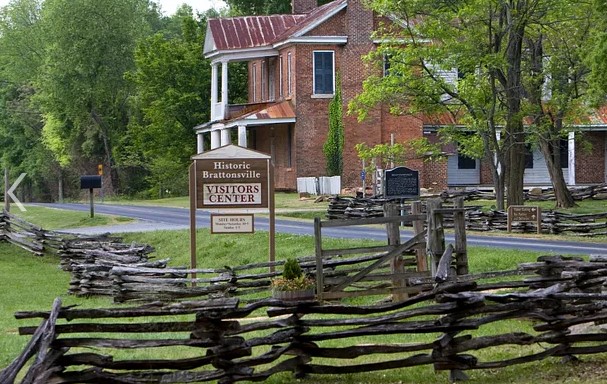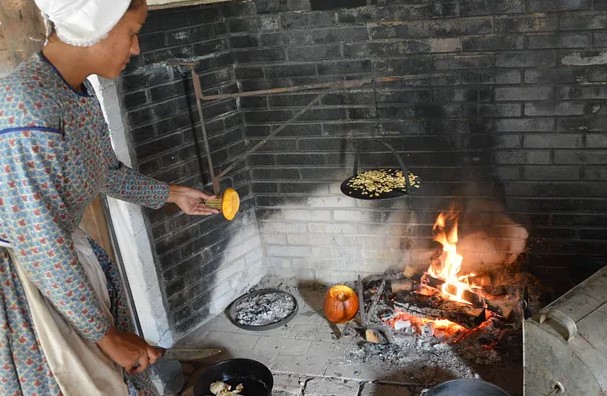
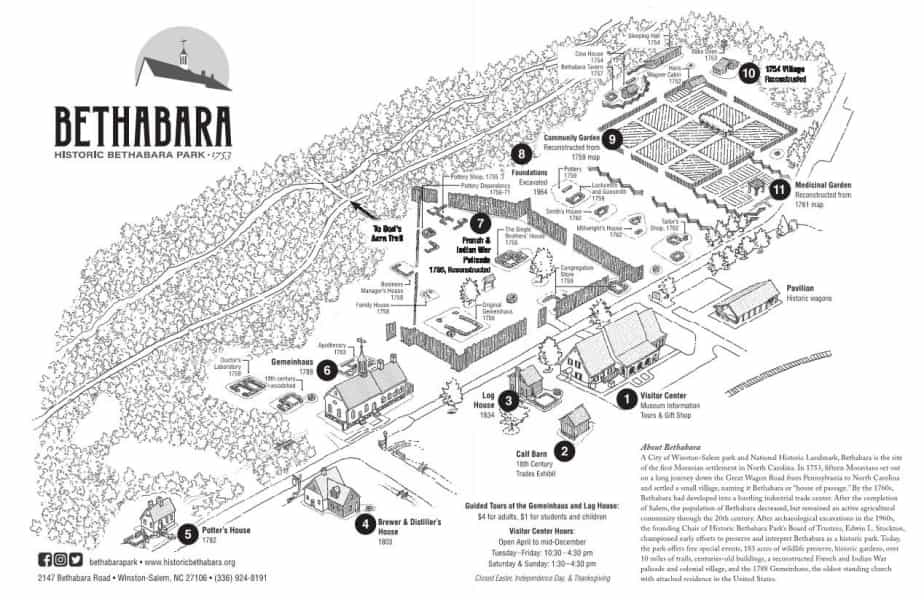
Bethabara restoration work at Historic Bethabara Park in Winston-Salem, North Carolina involves ongoing preservation and reconstruction of the Moravian settlement buildings. Bethabara was the first Moravian settlement in the North Carolina piedmont. Founded by German-speaking Moravians in 1753, Bethabara became a bustling industrial trade center. Now a National Historic Landmark and Local Historic District, Bethabara Park encompasses 183 acres. Within the park are historic buildings and gardens, trails, a reconstructed palisade, and colonial village. Also located on the property is the 1788 Gemeinhaus Church, the oldest standing church with attached residence in the country.

We worked on the Bethabara restoration with Midwest Maintenance Inc. (MMI). MMI specializes in comprehensive historic restoration and preservation. We have worked on several very successful restoration projects with them in the past. We appreciate MMI’s dedication to restoring historic buildings for modern use while honoring their history. Our scope of work for this project included two separate buildings in the park that needed structural repairs.
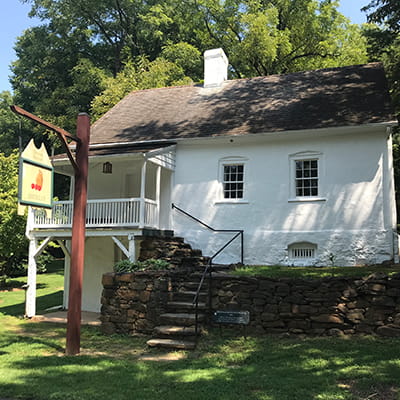
The Distiller's House
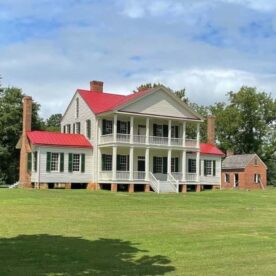
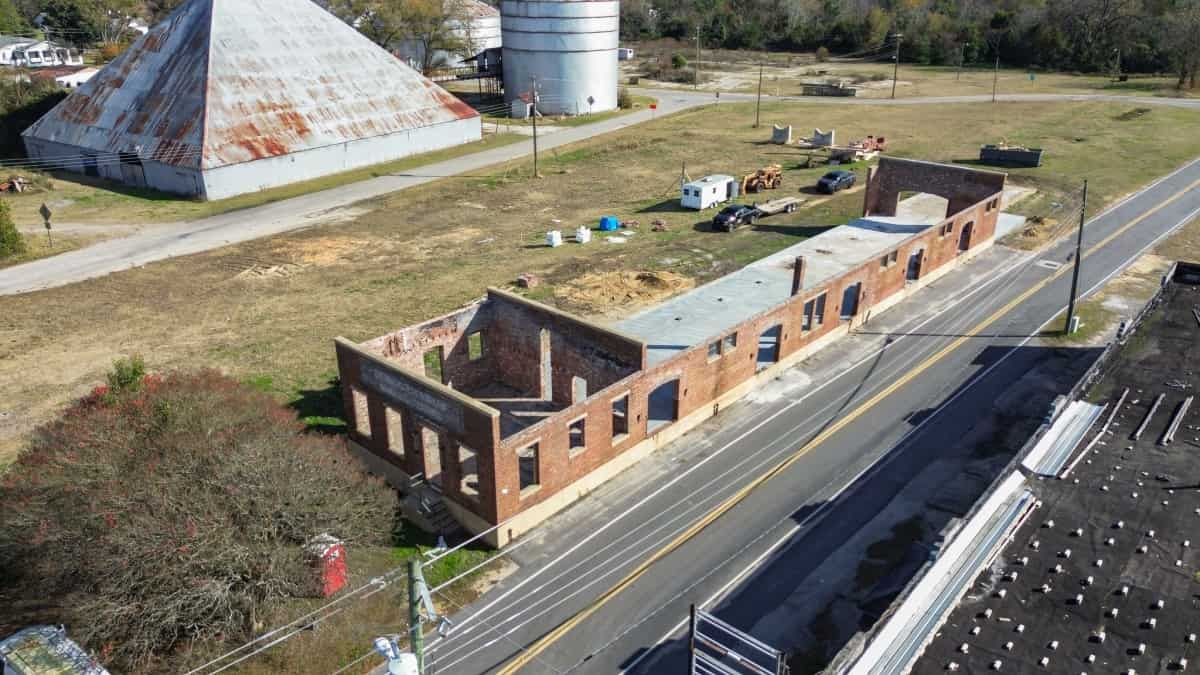
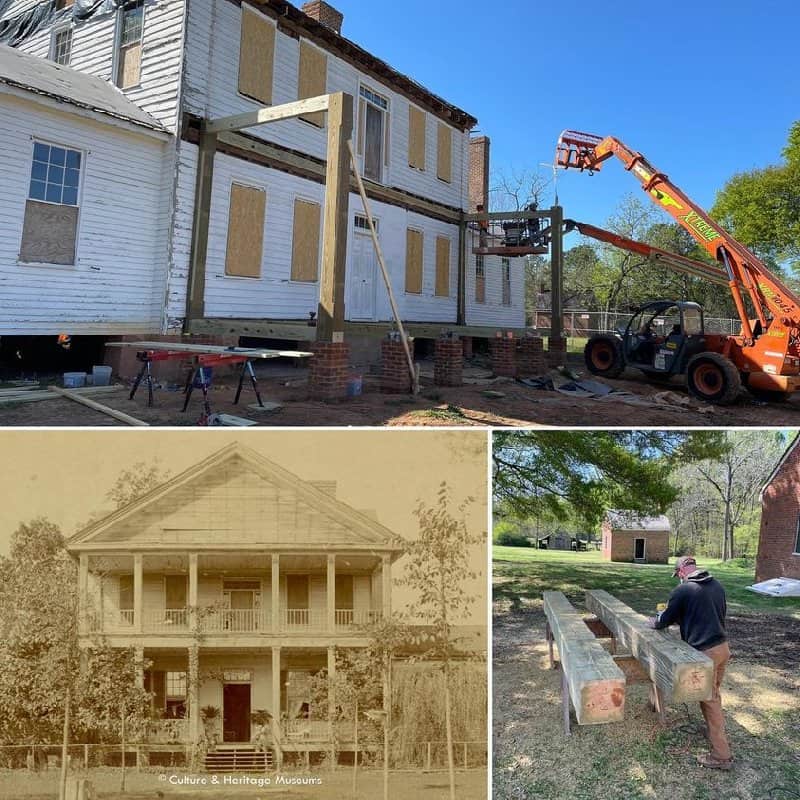
The Distiller’s House, built in 1803, replaced the previous two buildings that housed both the distillery and the distiller’s living quarters. The first was replaced by a larger building that was unfortunately destroyed by fire in 1802. This current structure served as housing for the distiller’s family and as a distribution point, while the actual distillery was moved to a detached building. Distilling spirits and brewing beer were common activities when the Moravians founded Bethabara. They made brandy, whiskey, and beer for themselves and to sell and trade.
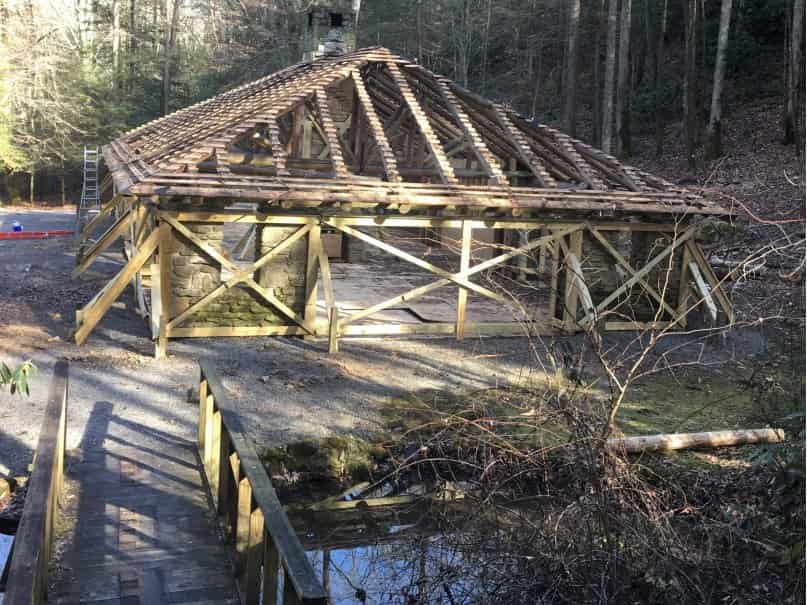
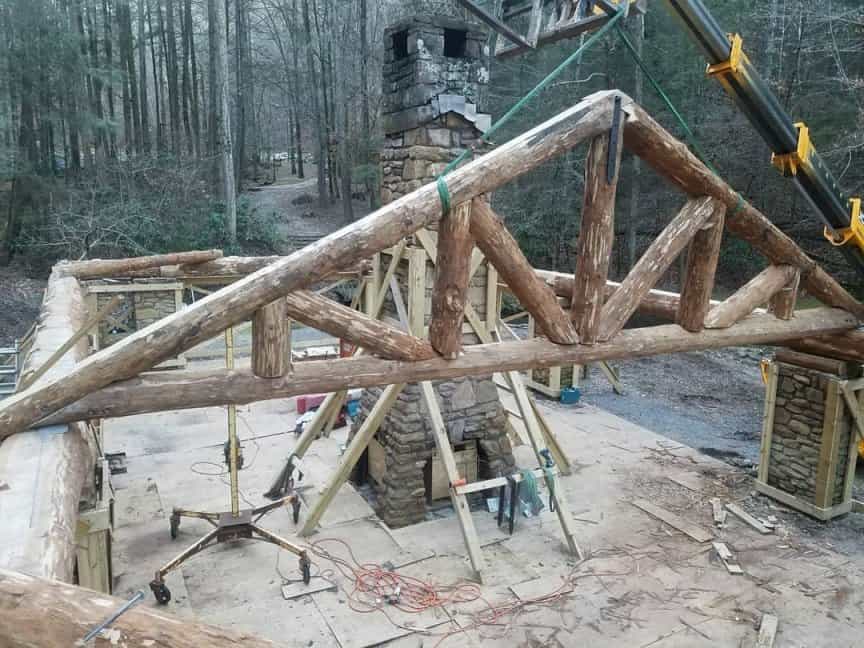
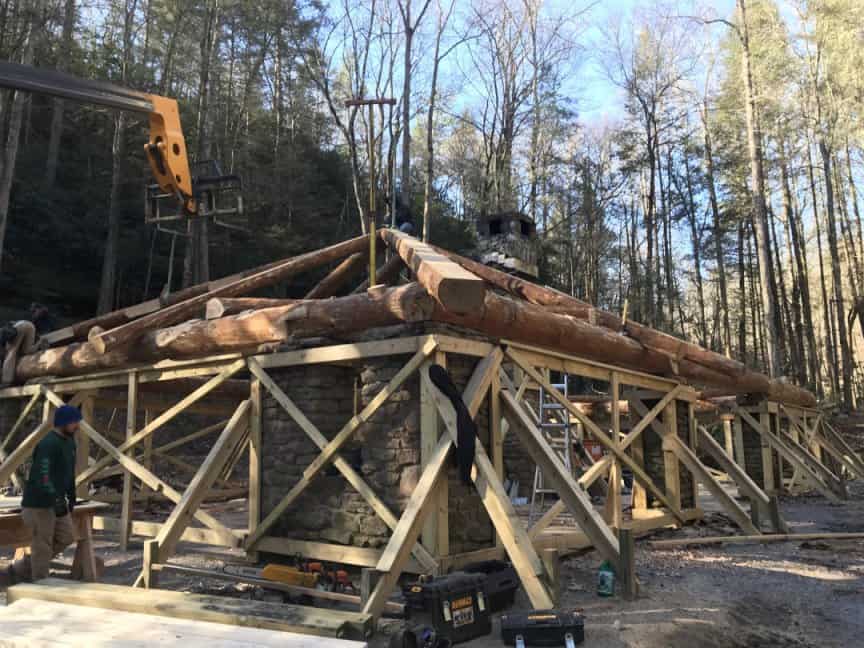
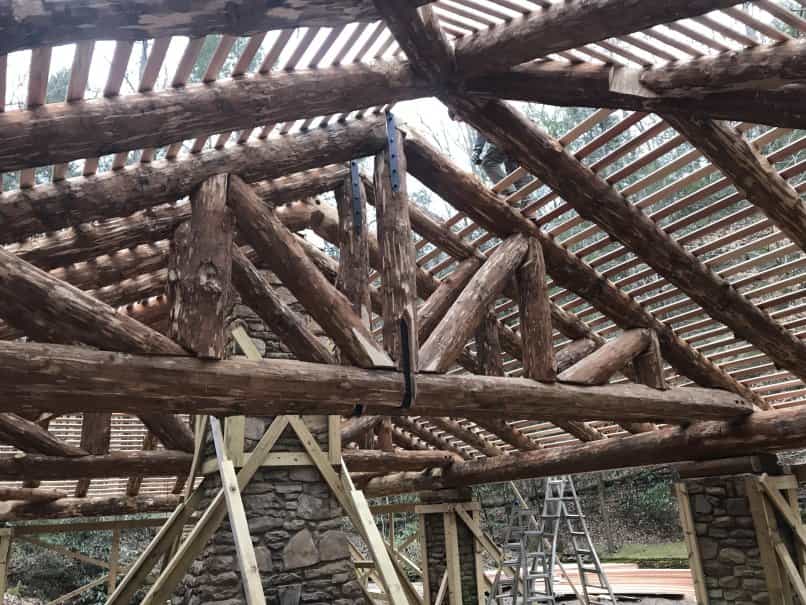
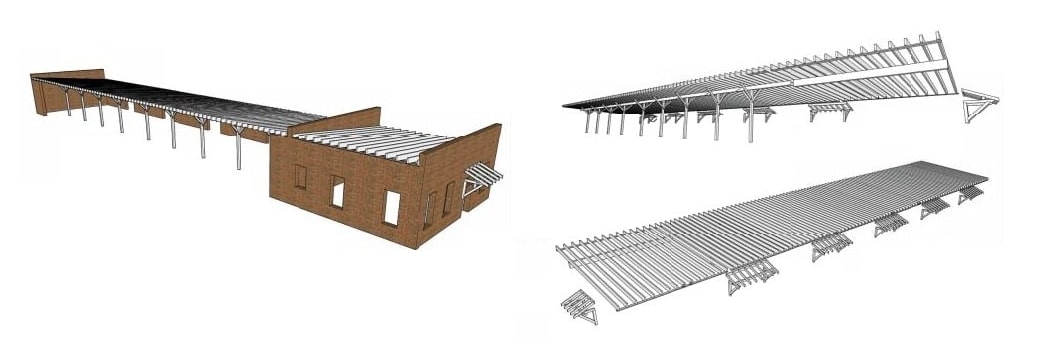
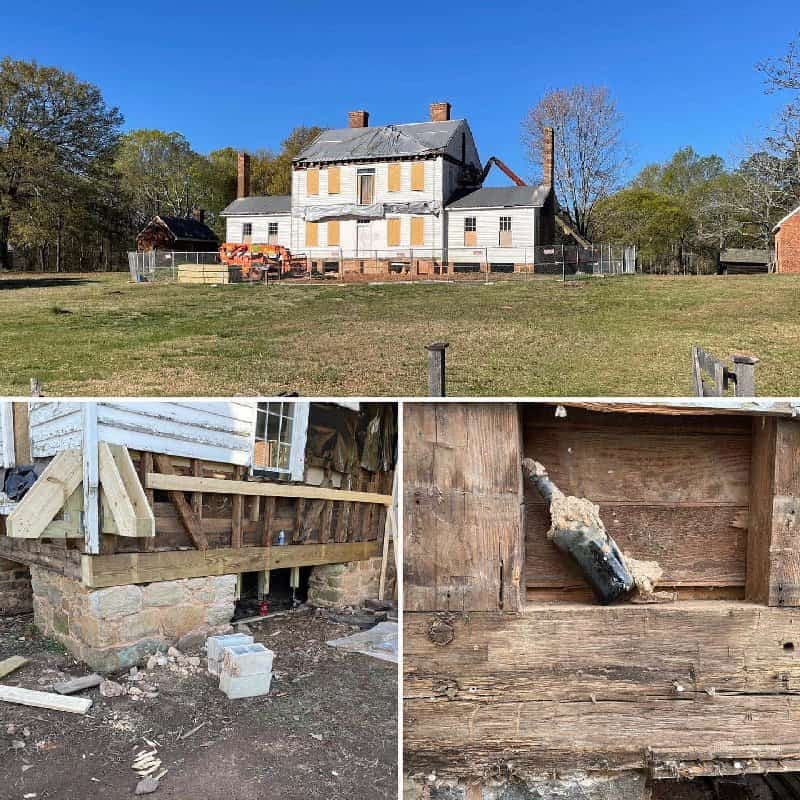
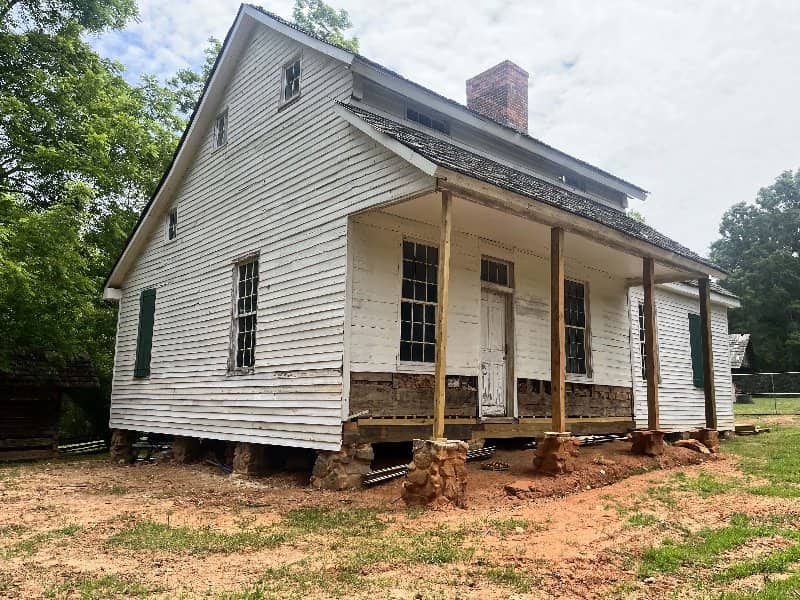
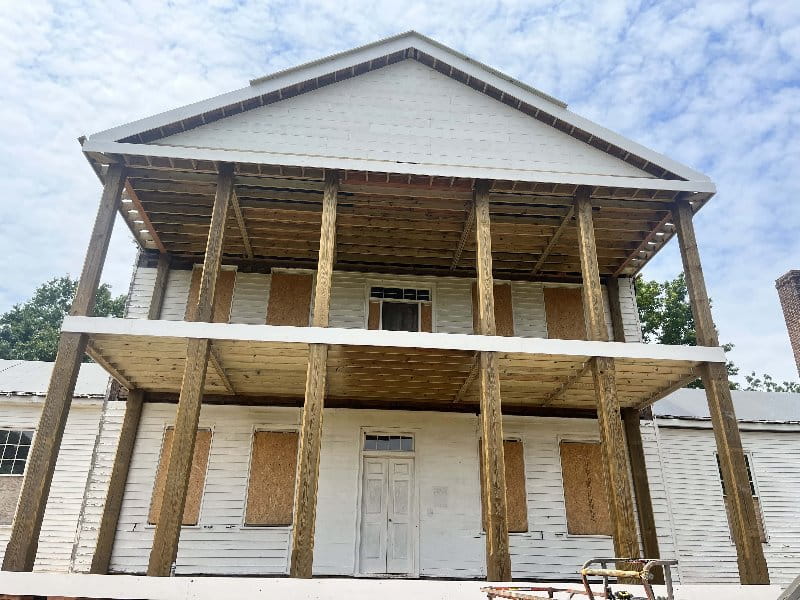
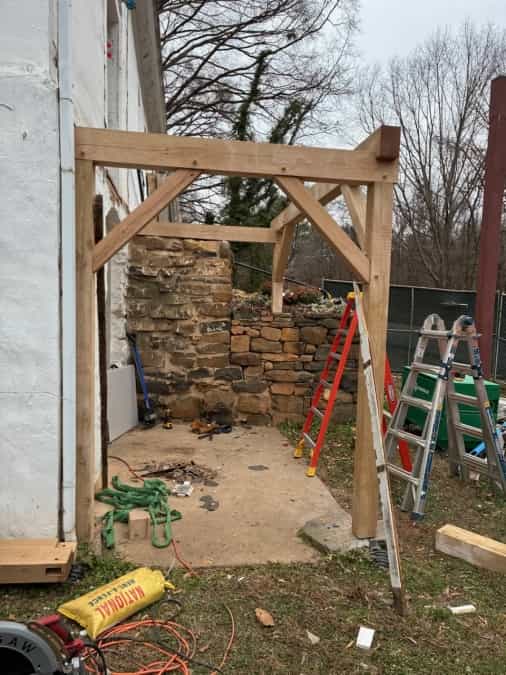
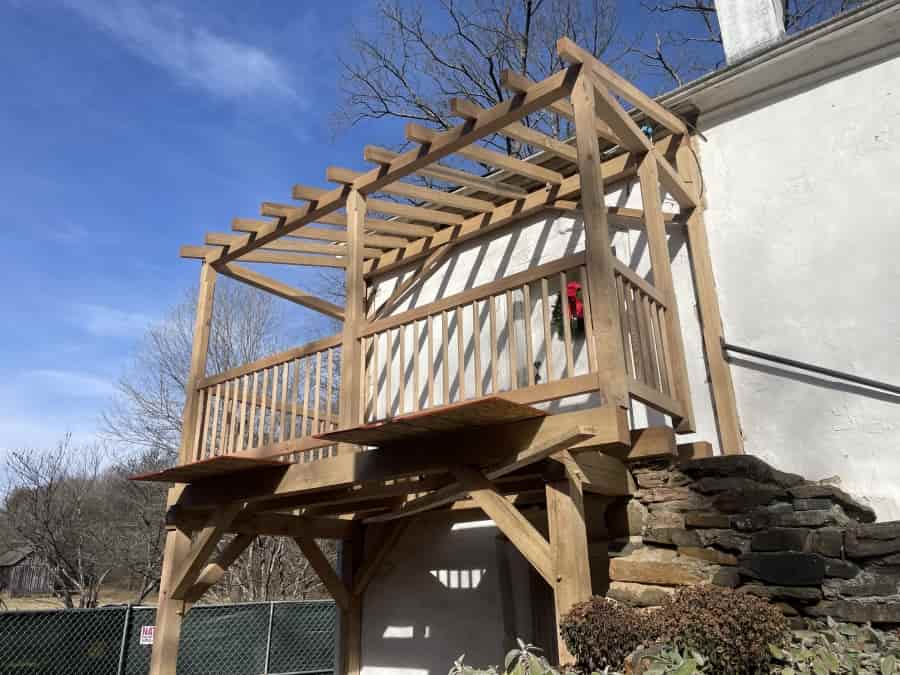
At the distillery our scope of work was to remove the back porch timber frame, measure, detail, and rebuild it. As always with historic restoration, our goal was to reuse any timbers that were in good enough condition to be rescued. The two-level porch was in very bad shape and definitely not original to the 1803 structure. The lower level was smooth sawn Douglas fir, hewn to appear old, with a little white oak mixed in. The upper level of the porch was all white oak, and very little of it was in usable condition. We made the decision to only use two knee braces from the structure. The few remaining timbers that could possibly be reused elsewhere were put in storage on site for future projects or repairs. We also saved the white oak floor decking which was in great condition. The craftsmen on site were very happy to have the material.


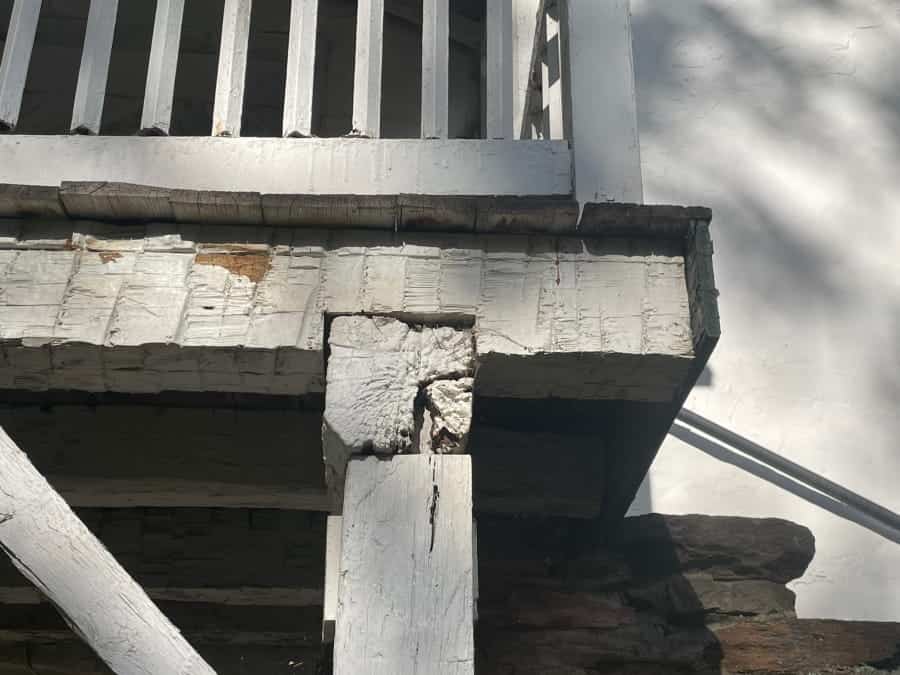

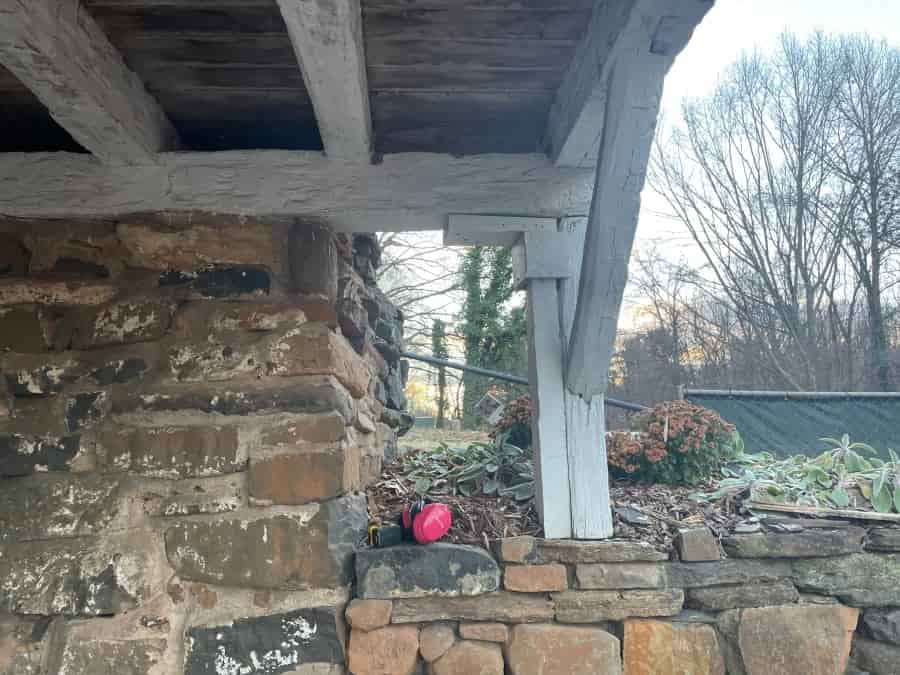
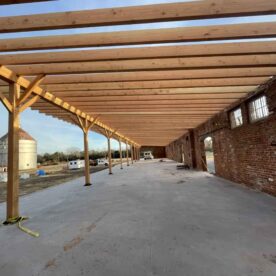
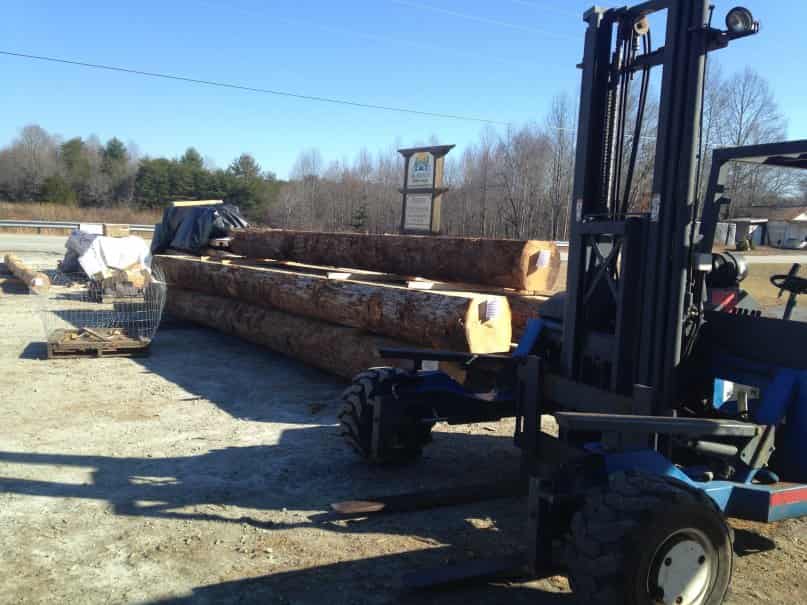
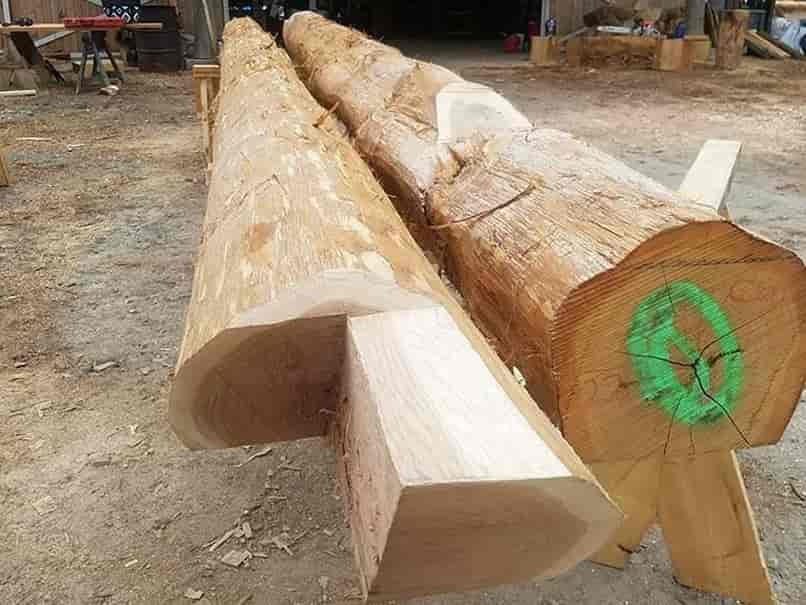
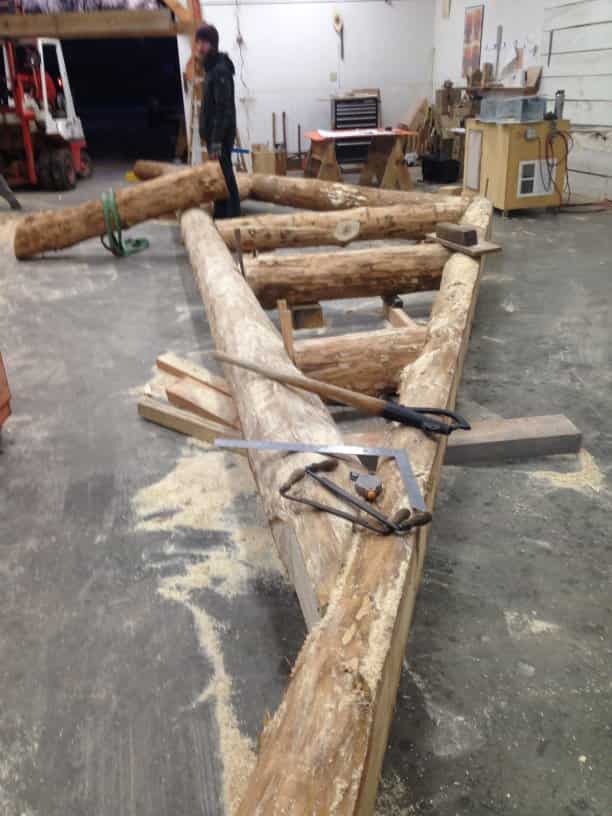
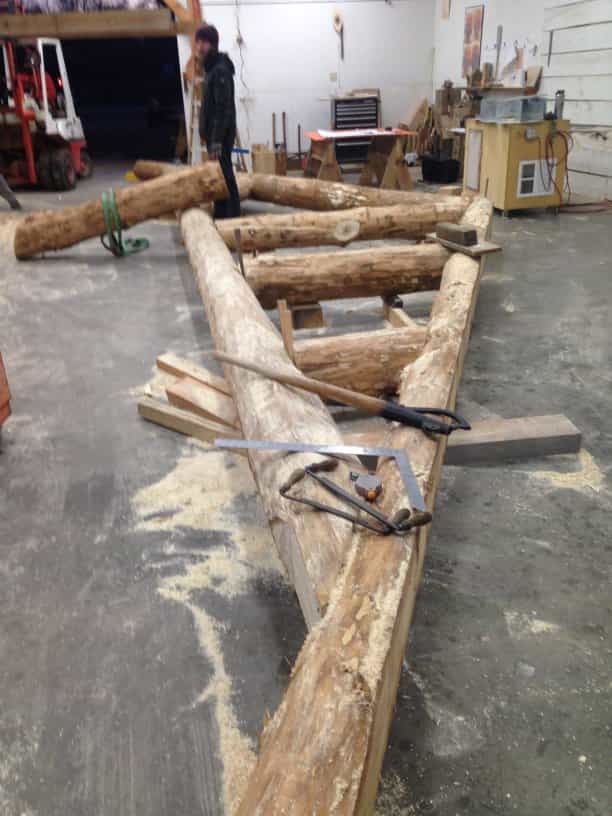
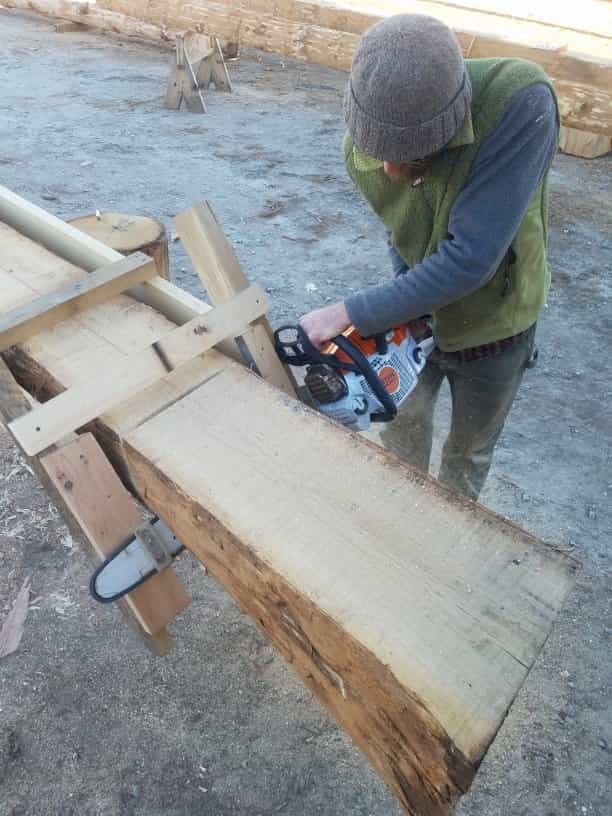
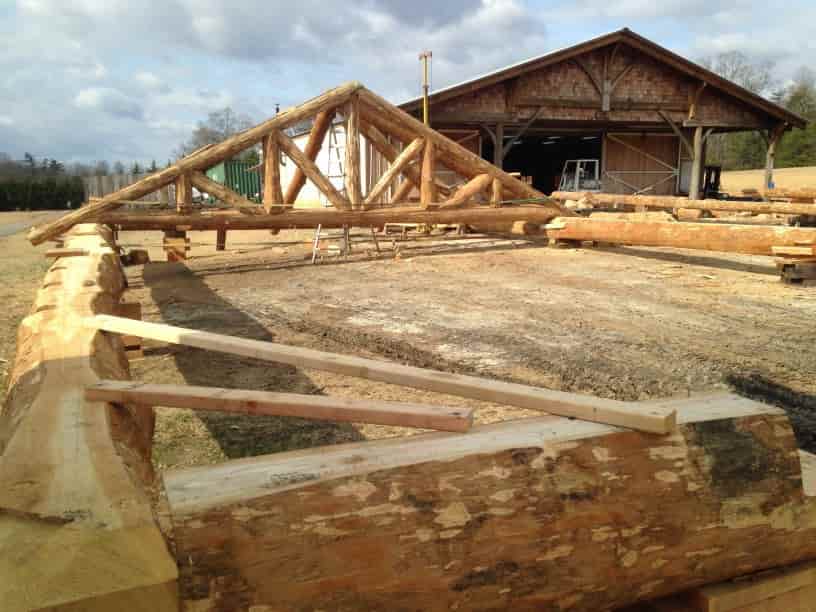
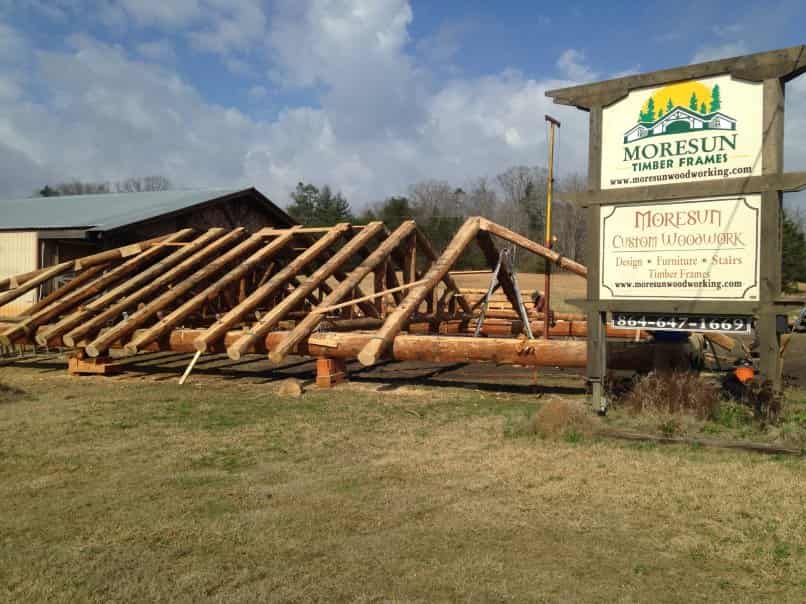
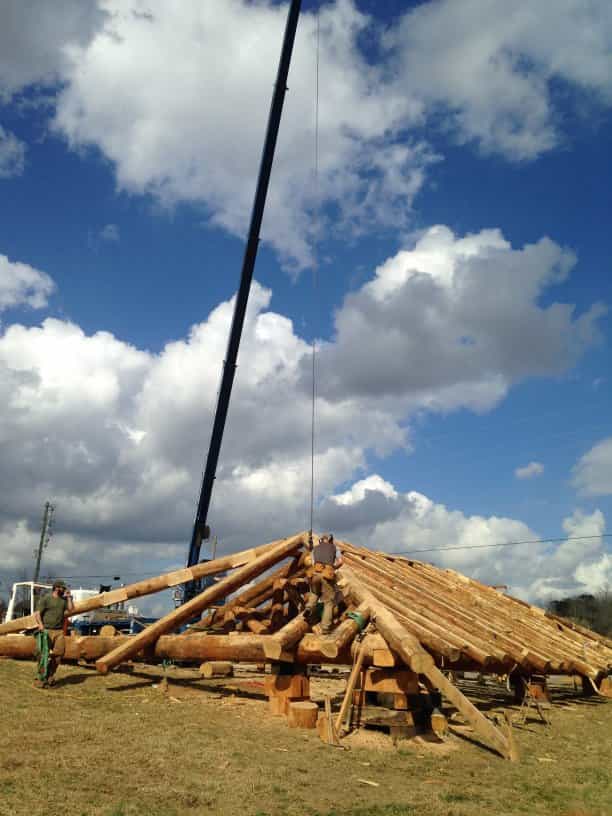
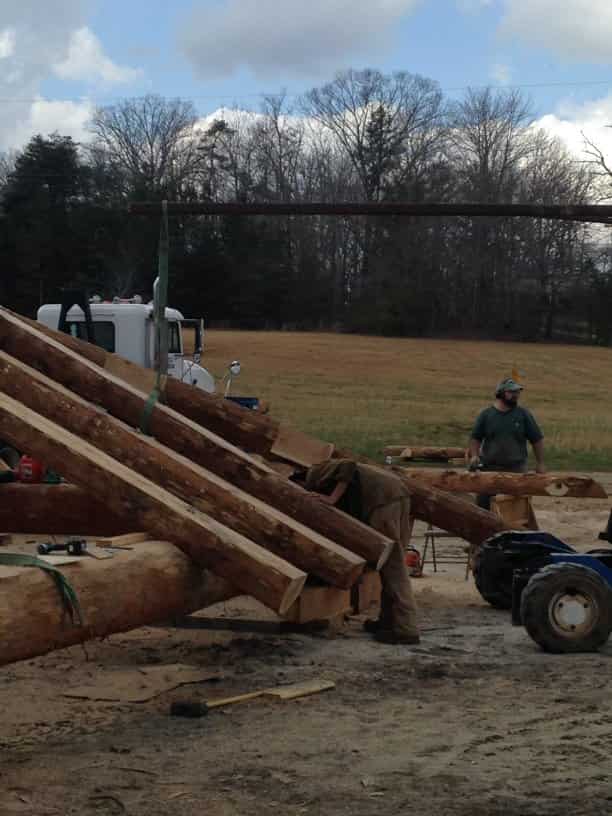
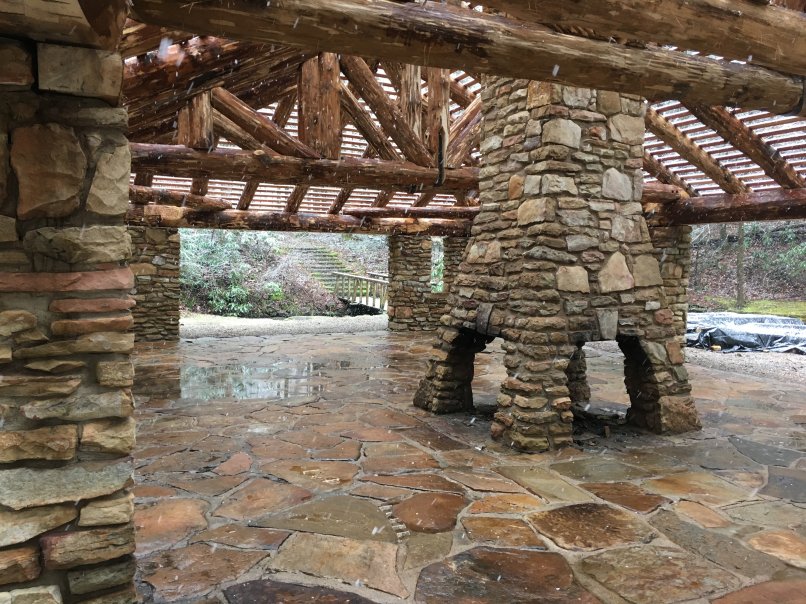
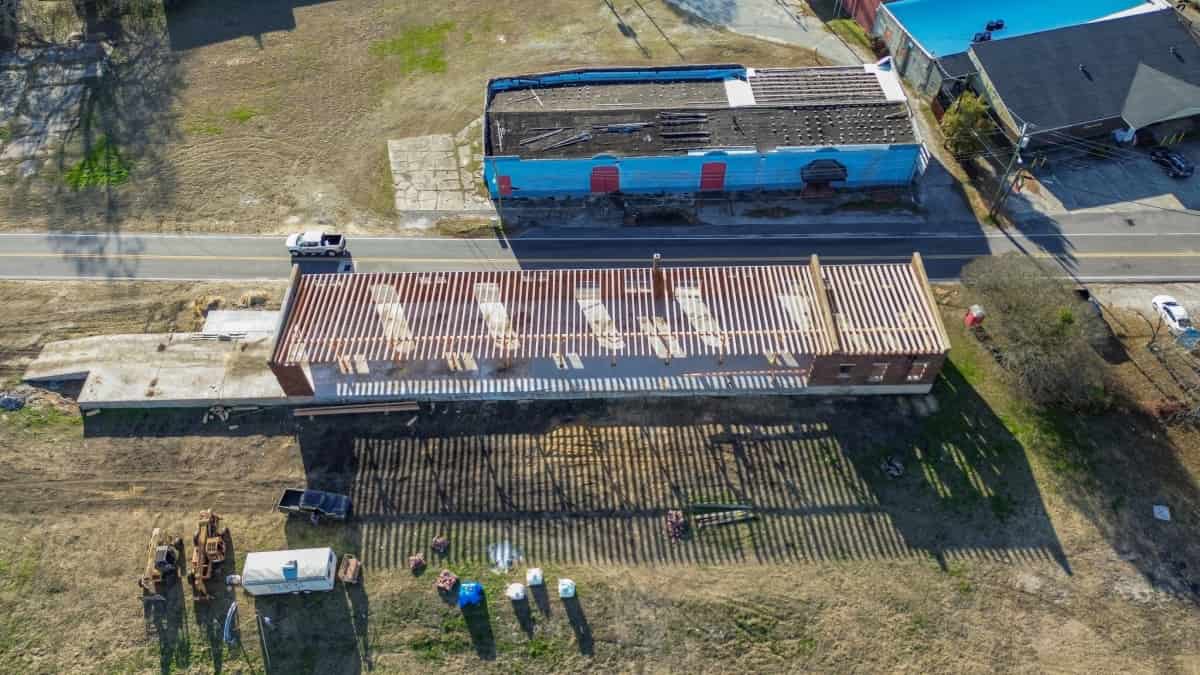
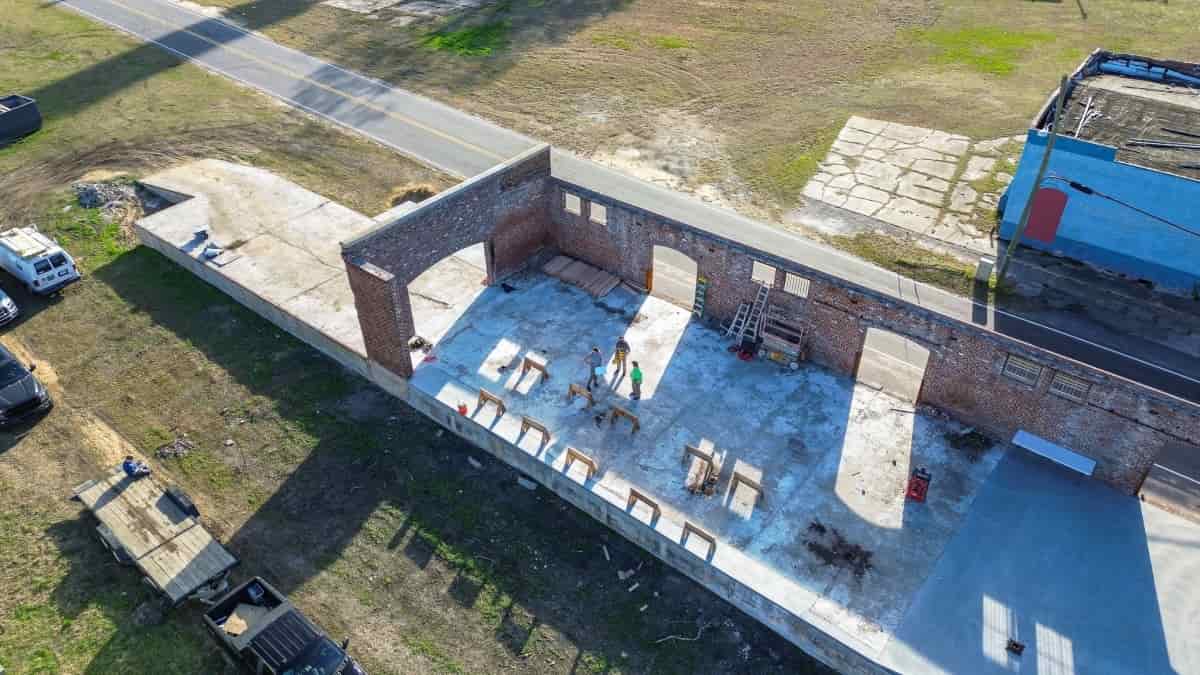
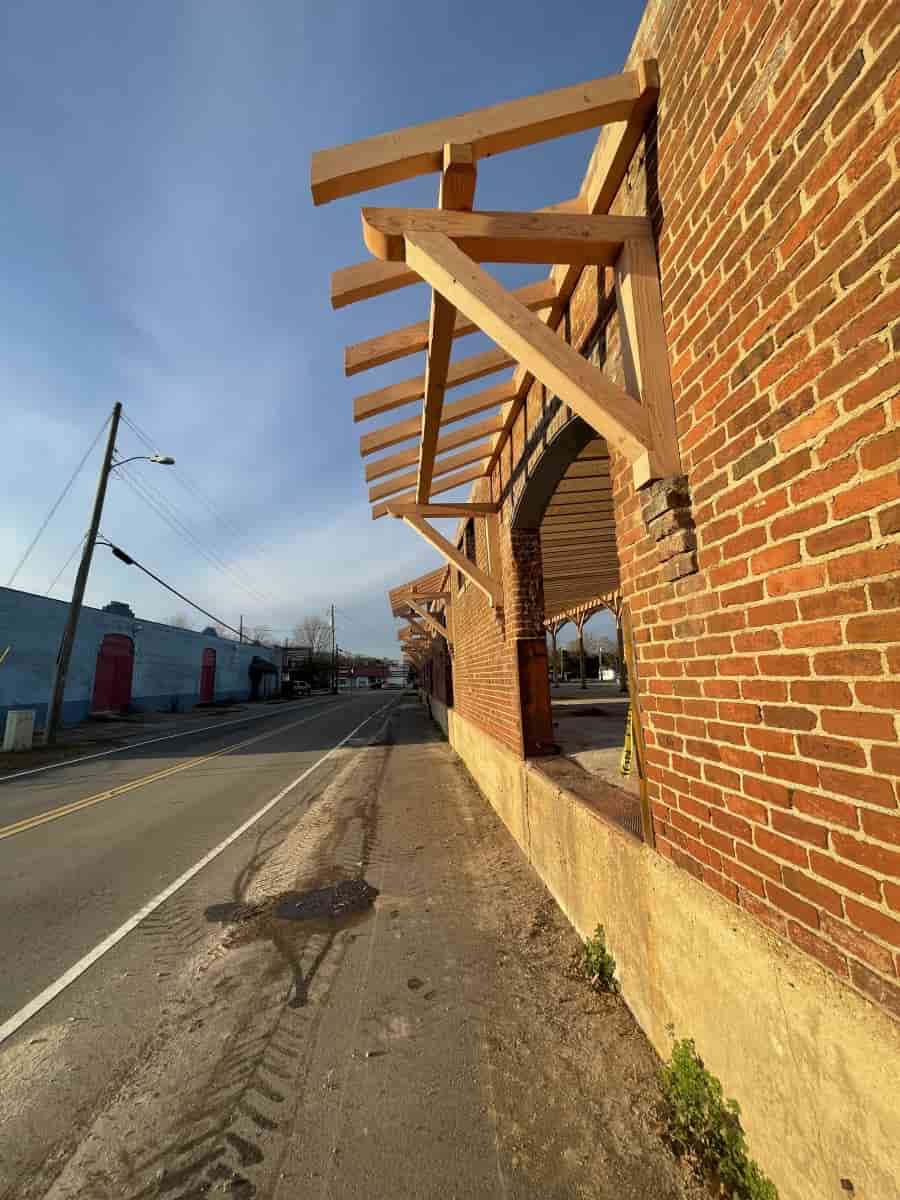
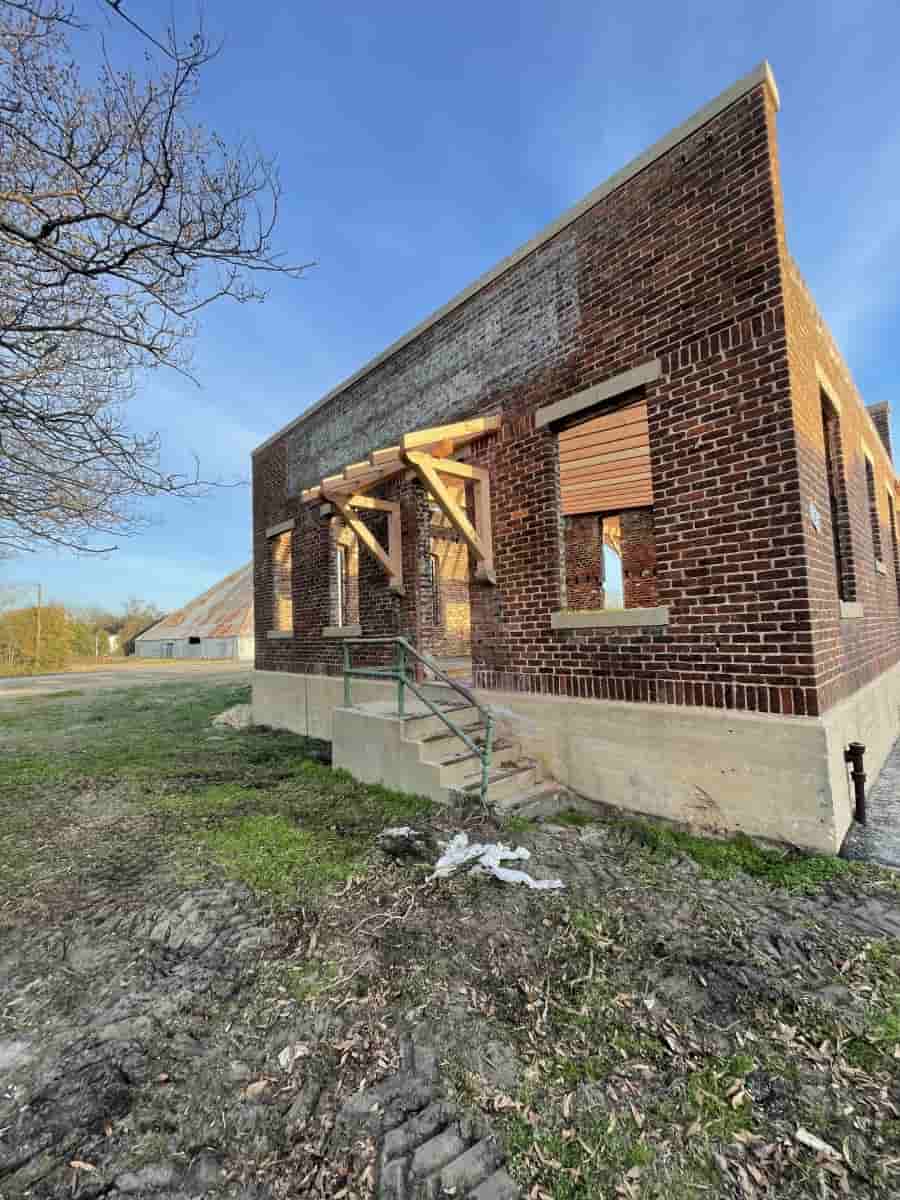
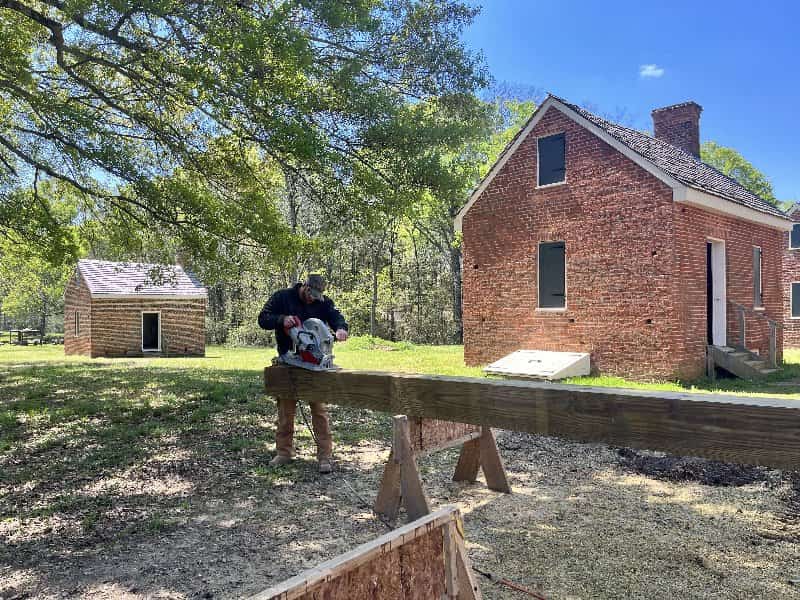
We reproduced the timber frame as close as possible to the original. We used white oak timber. We were able to find some timbers that were sawn about 7 years ago so they were considerably dryer than freshly sawn timber would be. (Note that white oak timber is generally not available dried because it checks and splits too much if dried quickly.) We re-sawed the timber on our sawmill to the dimensions needed and hand cut joinery to match the original where possible. The new porch frame went up nicely. It sits back on the rock foundation as it was. One post was only about half supported by existing rock. Fortunately, we have a crew member with a traditional masonry background, and he was able to find rock on site to add back in. Handrails are back installed and safe for visitors. MMI would be installing new floor and roof decking as well as the finished roof material soon after we left. The structure will be painted white to match what was there.



Historic restoration

Old porch replicated

Post support added

Aerial view of Distiller's House
The Gemeinhaus
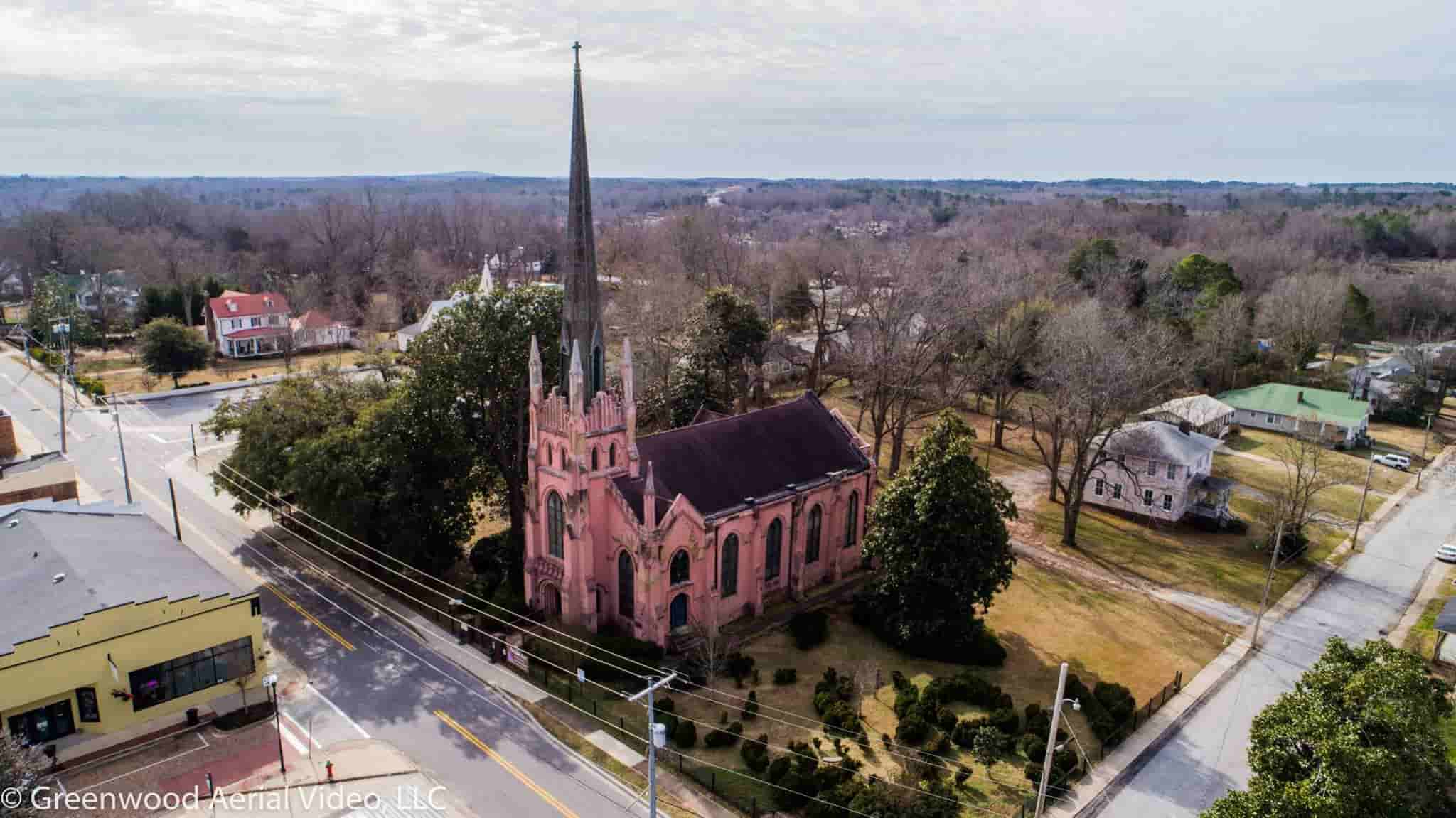
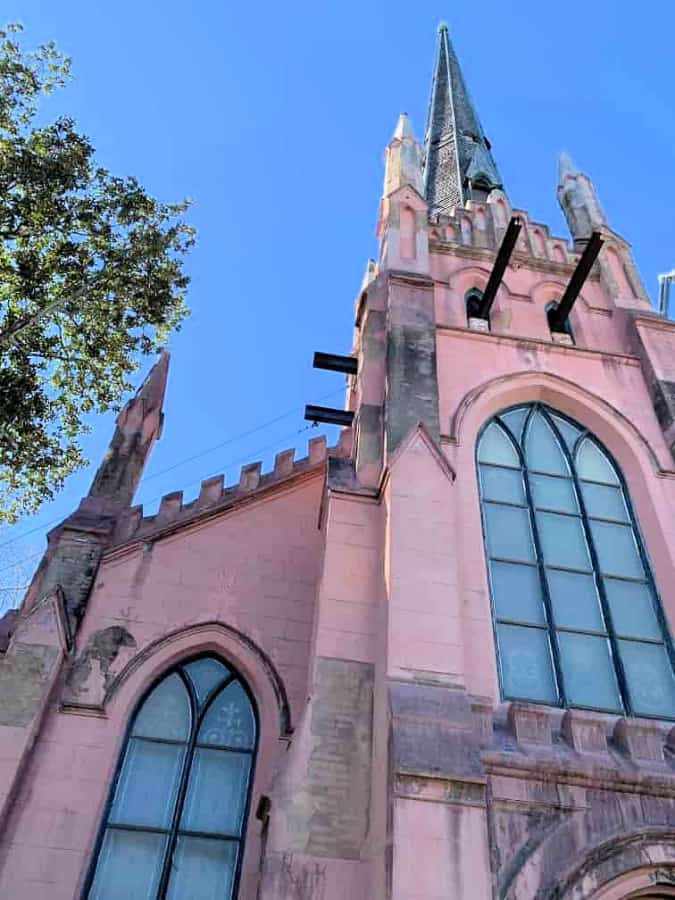
This Geimenhaus, erected in 1788, replaced an original log structure built in 1756. Gemeinhaus is German for “congregation house” and the building served as a church, meeting hall, school, and residence for the minister and other church workers. Stone for the foundation was quarried from a local farm, and timbers were hewn by hand. The Gemeinhaus served the congregation until 1953, when a new replacement church was built.
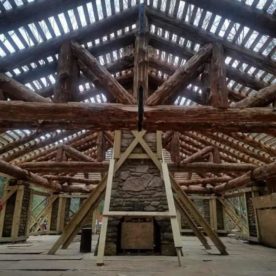
On the Geimenhaus our scope was to reinforce timbers in the attic that were associated with the roof structure and the bell tower. The plans called for this to be done using custom steel gusset plates and bolts. We would also need to replace one timber ceiling joist that had significant water damage.
There were some details about the plate connections Stephen wanted to discuss with the engineer so we had a meeting on site. In the beginning of the meeting, folks representing the park asked if the plates would contrast with the traditional look of the framing. In the initial design this was not a concern because very few people ever go up into the attic and certainly the general public never sees it. Between us all, it was agreed that the preference would be to have of the necessary repair work done with timber instead of steel if possible.
There was a bit of good fortune in terms of the team on hand. We at MoreSun Timber Frames are well versed in traditional timber materials, tools, and methods. The engineer on the project has a very extensive background in traditional German timber framing. If it had been a regular carpentry crew and engineer, the steel plates would probably not have been eliminated. Hats off to the city of Winston-Salem and the architecture firm for picking a well-qualified and appropriate team. In a short time of looking around and discussing the issues we came up with some good ideas to make it all work without the steel plates. Just timber and some concealed screws. The engineer went back and drew up the details and specifications for the work and we went back to gather and prep the timbers.
Our Work on the Geimenhaus
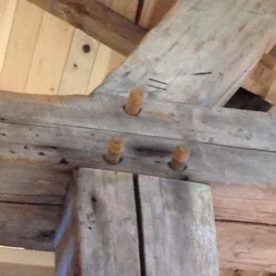
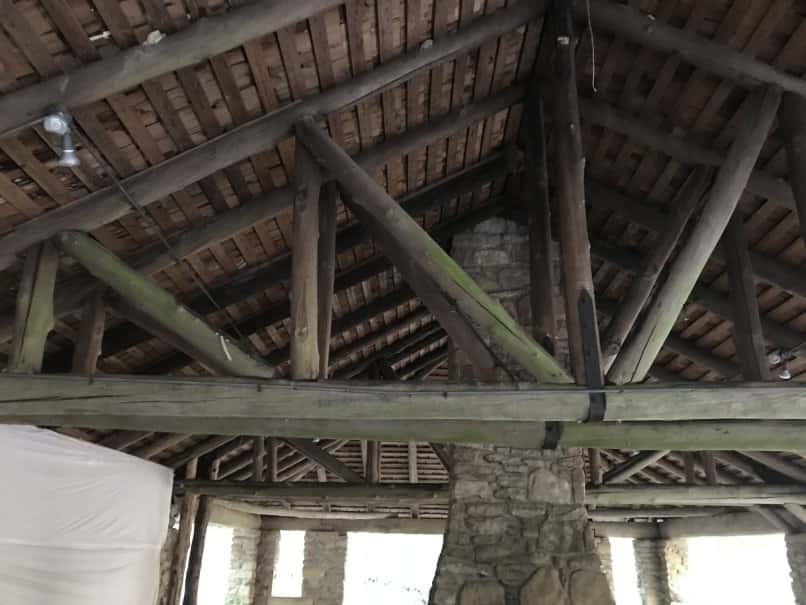
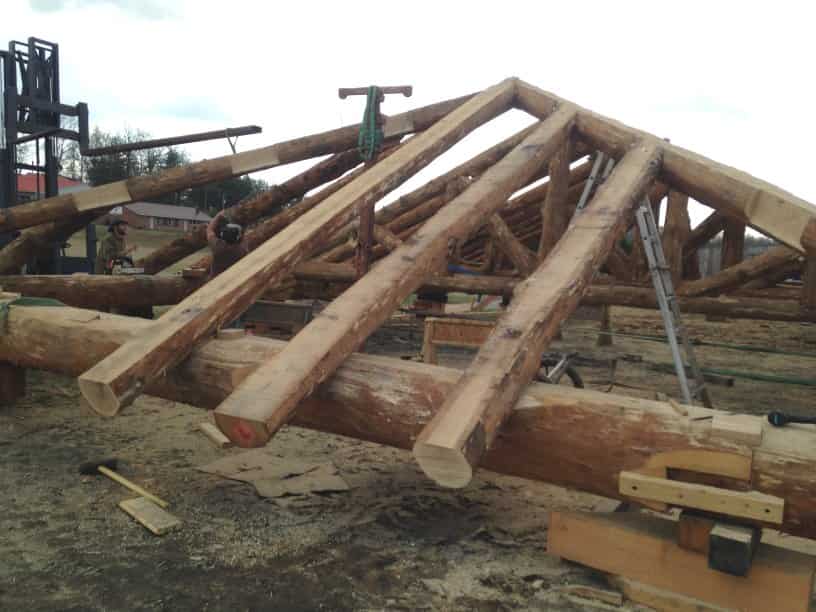
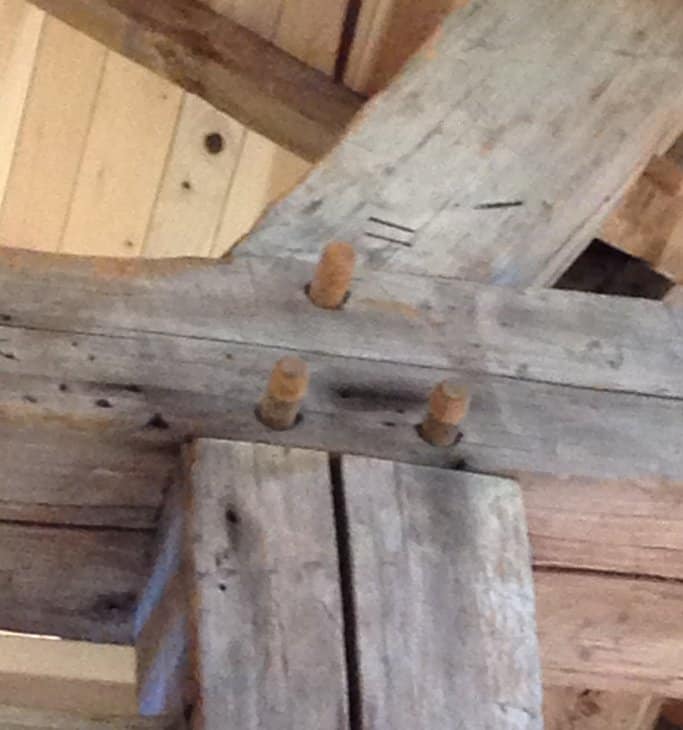
The work included: adding small collar ties to the mortise and tenon connections at the peak of the main roof, adding a frame of 8x8 timbers to the center of the tower posts to carry beam connections and concealing some fully threaded screws to the tower bracing. Anywhere we put in a screw, we plugged the holes with 1" oak pegs to at least mimic the original construction. All material used was white oak.
There was one ceiling joist that had enough water damage to warrant replacement. This water leak was what initiated the whole project. It showed itself in the form of damage to the plaster ceiling in the balcony of the meeting room right next to the organ. We determined that removing the joist and replacing it would cause unwanted damage to more of the ceiling area. So, it was decided to add a new joist alongside the bad one. We matched the species and dimensions of the timber. The problem was we could not just slide a new one in. There were too many things in the way. The timber had to be replaced in three pieces roughly 7' long to join together into one timber about 17' long. We used two vertical half lap joints secured with a series of structural timber screws to join them to each other as well as the existing joist.


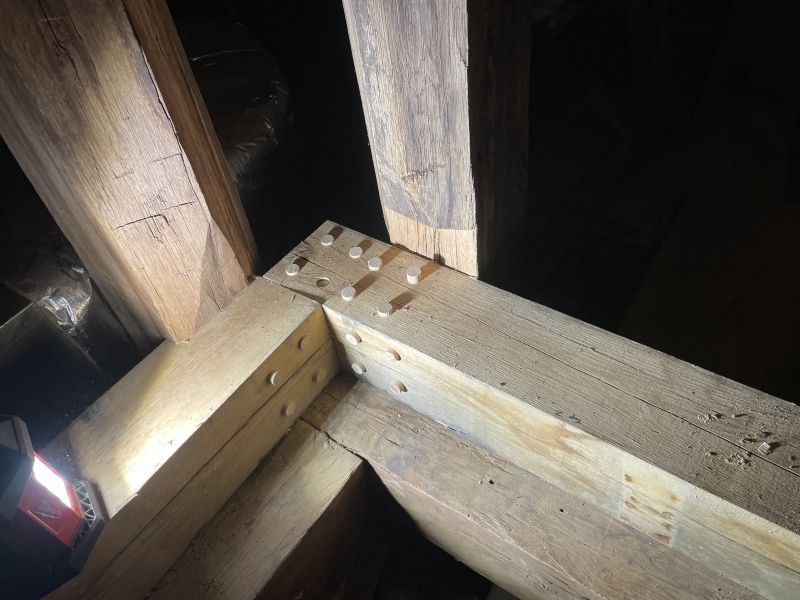


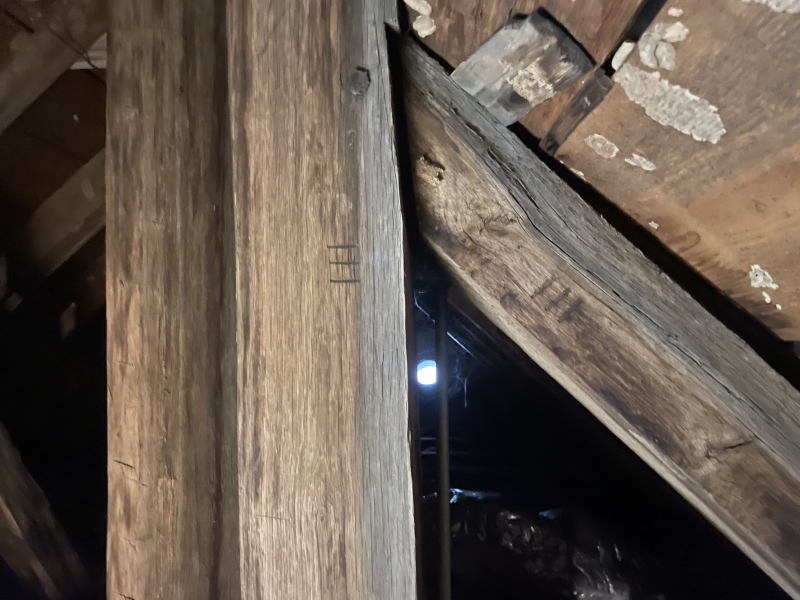
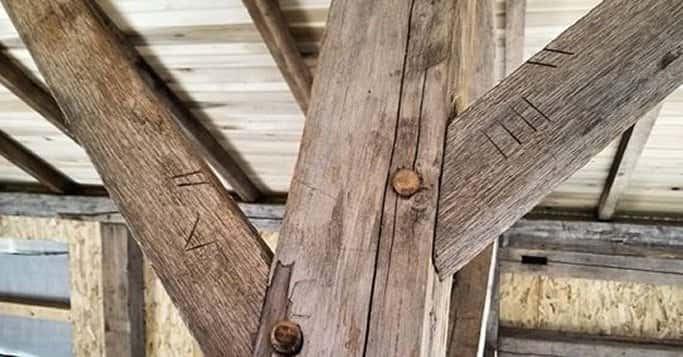
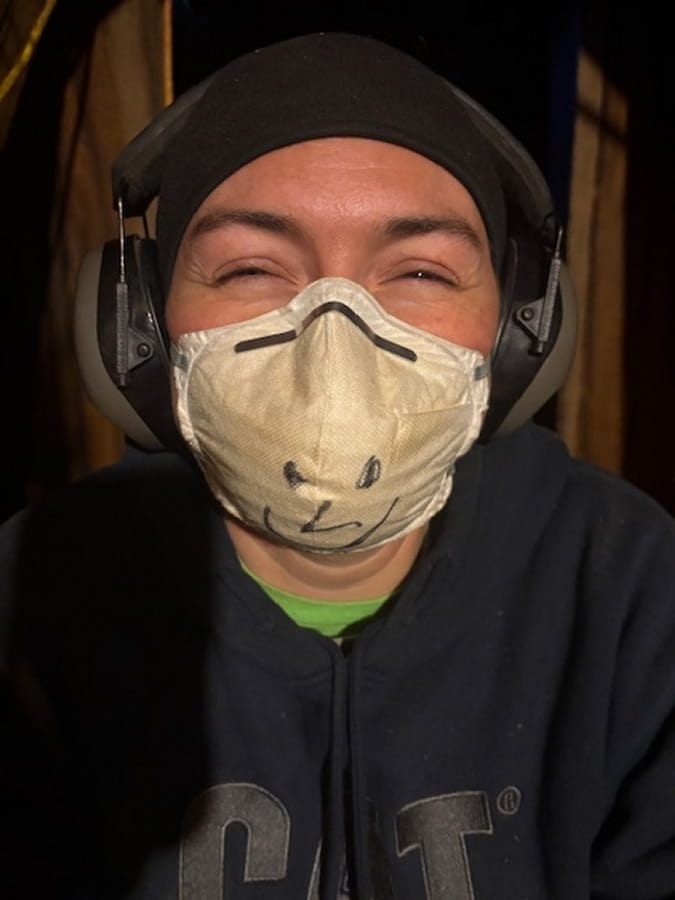
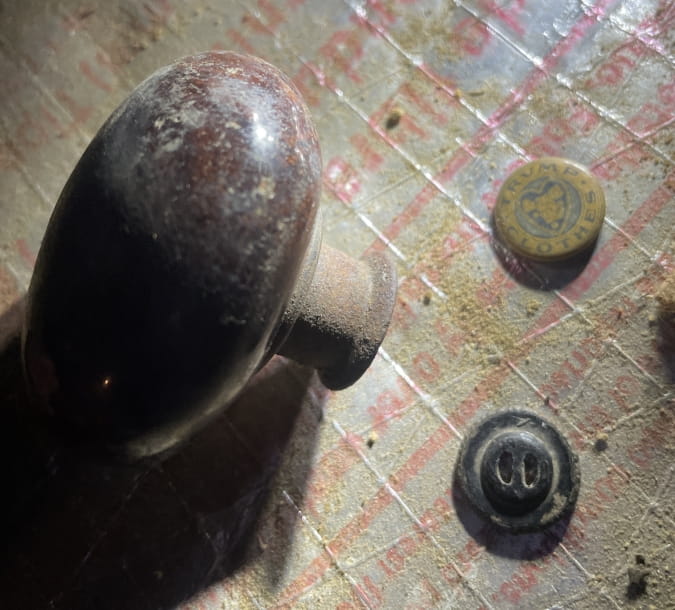
Working in the attic was dark and dirty work. The first day was spent cleaning, sweeping, and vacuuming the space. We hauled several garbage bags of dirt, dust, old insulation, and a bit of trash down the stairs. Even after that it was dark and dusty. We spent the week with headlamps and respirators and much needed showers at the end of each day. We had been asked by the park to keep an eye out for any interesting artifacts. We found an old door knob, a couple buttons, some timber pegs and old cut nails, as well as several marriage marks.


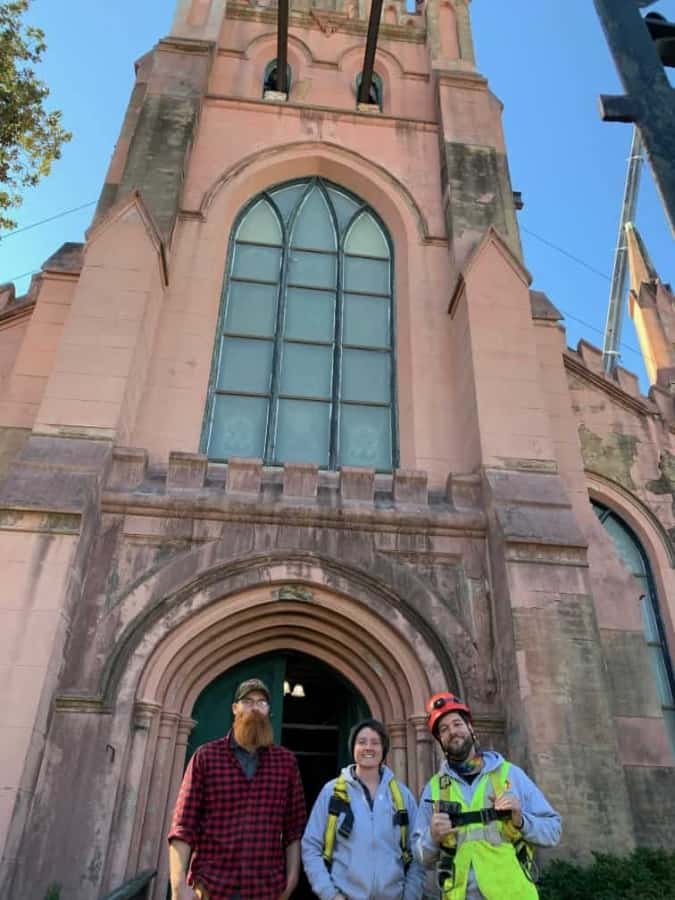
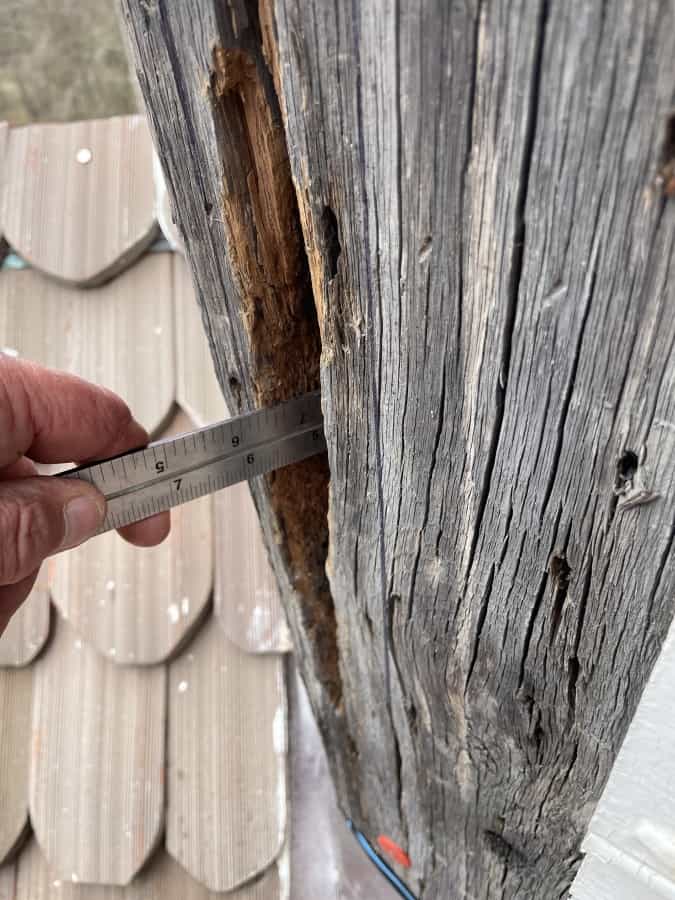
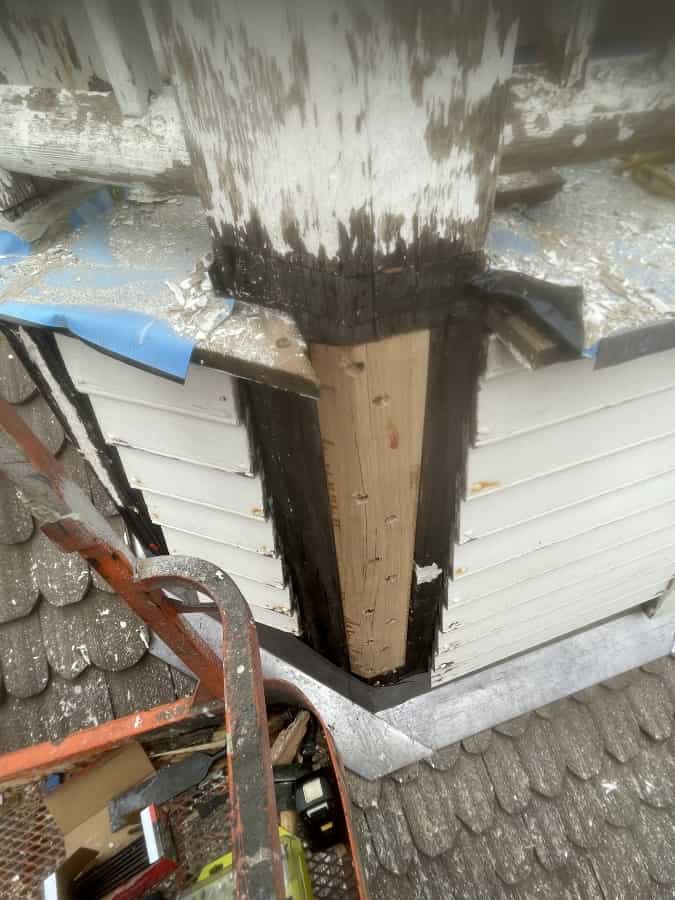
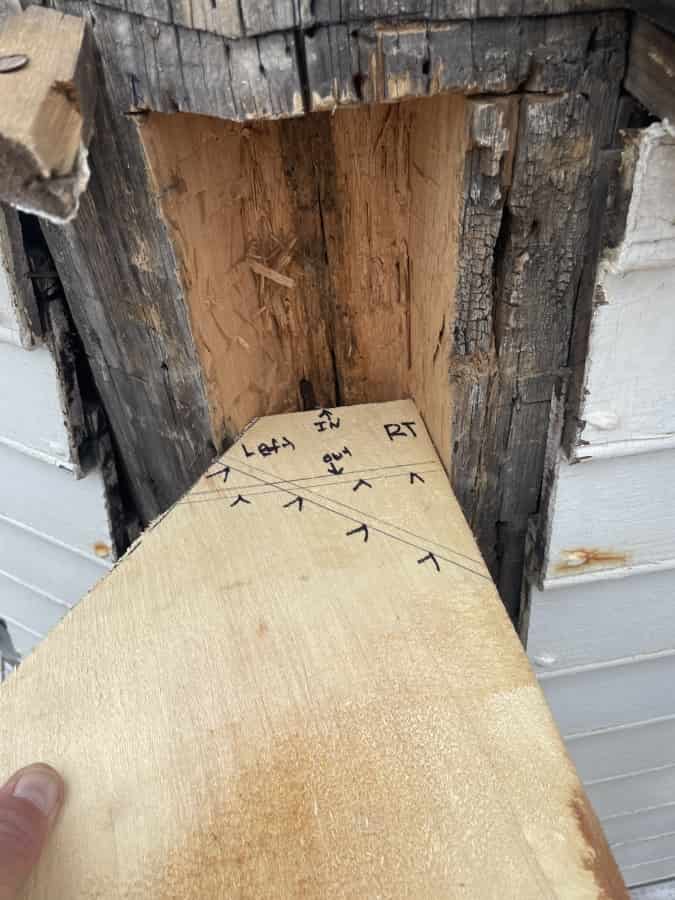
While another crew was working on the siding and roofing on the bell tower, they found some additional water damage on the outside of two posts. The engineer and Stephen went up in a manlift to look into the extent of the damage and find a fix. The worst of the two needed a substantial amount of timber cut out and replaced and the other was minimal enough to clean out and fill with structural wood epoxy. Historic restoration projects tend to evolve as more problems are uncovered during the repair process. Thankfully, there is usually an allowance in the budget for unknown issues, and we were able to do the work while still there on site. We also had a great view of the grounds while up in the manlift!
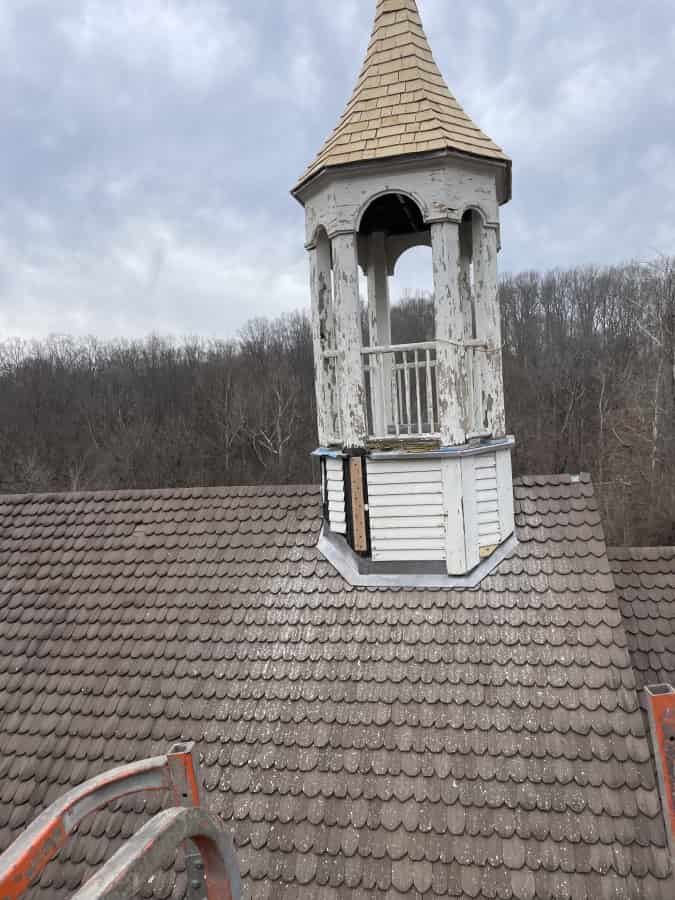


Getting to see views from the manlift

Up pretty high!

Log house, calf barn, visitor center

French & Indian War Palisade Fort
The park staff and volunteers were so happy to see the work getting done. It was clear that the park and its place in history are very important to them. We were thanked over and over again and given lots of history lessons. The park is very actively used by the locals. Lots of folks took a minute to talk to us, ask what we were doing and fill us in on their thoughts on the park, its history, and its current value to them. There seemed to be an endless parade of tourists, visitors and school groups touring the park, its grounds, and historic buildings. The Bethabara restoration is truly the kind of work that makes us proud to be timber frame craftsmen.